

Helping people with ALS and SCI and their caregivers
When someone sustains a spinal cord injury or disease (SCI) or is diagnosed with an illness such as amyotrophic lateral sclerosis (ALS), there are a multitude of physical and emotional changes.
Whether it’s navigating activities of daily living with new physical limitations, learning new ways to relate to friends or receiving emotional and practical advice, support groups can help people improve their quality of life.
Catherine Wilson, PysD, ABPP, and Martin Forchheimer, MPP, shared some of the benefits support groups for people with ALS and SCI and their caregivers, as well as best practices for successful support groups and differences between support groups for SCI and ALS, during Wednesday’s final day of the 2026 Paralyzed Veterans of America Healthcare Summit + Expo at the Horseshoe Las Vegas in Nevada.
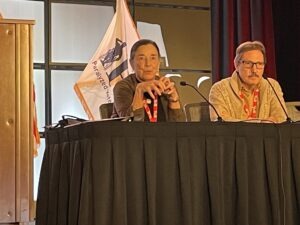
Wilson says successful ALS support groups share several qualities, including creating a trusting space where participants don’t feel judged or stigmatized, providing up-to-date information about progression and symptoms to help patients and families make informed decisions, focusing on coping techniques, offering both in-person and virtual meeting options and encouraging open dialogue about the disease and progression.
“When you’re doing a support group, you have ALS patients, which are a whole bunch of different areas just being diagnosed, having it for a year or two, some who have had it for quite a while. So, that’s important to have a variety and not just be the people who just got diagnosed, because they need that information from the people who have been living with it,” Wilson says.
Peer support is also key for emotionality and strengthening resiliency, but Wilson says having support groups led by health care professionals is important to keep the conversations on track.
Wilson says there are multiple options for online support groups, including I AM ALS, the ALS Network, the ALS Association and the Department of Veterans Affairs.
But it isn’t just the patient who needs support groups — caregivers can also benefit from them.
“One of the reasons it’s so important to have the caregiver in is because they’re going through almost the process of ALS, too, because it’s constantly changing and it’s really important for them to constantly get the information and be able to have a group that if they hear somebody else’s patient with ALS talking about something, they can go and go, ‘Wow, we’re not even dealing with that.’ And it’s just really helpful,” Wilson says.
Wilson says running separate support groups for patients and caregivers can allow both to ask questions they might not want to ask while the other person is present. For caregivers, she says the groups also provide better skills and help them accept that the person is going to die.
Meanwhile, Forchheimer says because people with SCI tend to be younger, are less likely to be married and are more likely to have paid caregivers and non-family caregivers, their needs and the dynamic for support groups are different from people with ALS. Frequently, SCI caregivers are not present during support group meetings.
“Particularly people new to spinal cord injury, they don’t want to talk with their spouse in their room. They certainly don’t want to talk with their parents, if that’s who’s going to be their caregivers, in the room,” he says. “They want to talk about sex. They want to talk about return to work. And they want to be able to do that without everybody hearing.”
He says ALS patients are also different because they know they won’t get better once they’re diagnosed, whereas SCI patients may see some improvement over time. In addition, SCI is an abrupt change, whereas someone with ALS may have been experiencing symptoms for a while. That sudden change causes a sense of isolation and depression, and patients need to develop new coping skills.
Forchheimer says SCI support groups are often led by peer mentors, and many participants are in earlier stages of their injury.
“Having peers involved encourages people to share because they’re going through different things. They come from different worlds from each other, but they’re experiencing some things similarly,” he says.
Overall, Wilson and Forchheimer conclude that support groups improve well-being for people with SCI and ALS and their caregivers, but tailored approaches are needed, especially for caregiver inclusion in ALS and dedicated support for SCI caregivers. Wilson says more research is needed to optimize support group timing, facilitation and content.