
National ADA Symposium kicks off in Phoenix
For people with disabilities, including spinal cord injury and disease, access to adaptive sports and recreation has many benefits, from camaraderie and a shared sense of purpose to conquering personal challenges and meeting rehabilitation goals.
But it isn’t just the athletes themselves who benefit from inclusion in larger sporting events; it can also be beneficial for the community, nonprofit organizations and corporate sponsors.
That was the message delivered by leaders from the nonprofits Team Access, Southern Arizona Adaptive Sports (SAAS) and the long-running El Tour de Tucson road cycling event in Tucson, Ariz., during the first day of the National ADA (Americans with Disabilities Act) Symposium at the JW Marriott Desert Ridge Resort & Spa in Phoenix.

The annual symposium, which runs through Wednesday, brings together leaders and experts in the ADA and accessibility fields and features more than 80 breakout sessions focusing on the latest information, guidance and best practices.
Team Access, the nonprofit and outreach arm of AGM Container Controls based in Tucson, Ariz., works with adaptive sports and community events to bring accessibility to the planning stages so it isn’t an afterthought. Parent company AGM has been in the aerospace and defense industry for over 50 years and also manufactures Ascension Wheelchair Lifts and owns Omeo America, which builds a hands-free, self-balancing wheelchair.
Team Access President Paul Davis says AGM CEO Howard Stewart happens to be an avid cyclist, and after working with SAAS Executive Director Mia Hansen to learn more about the disability community, they asked if she would help put together an adaptive cycling team for El Tour de Tucson, which attracts over 10,000 cyclists from across the country each year.
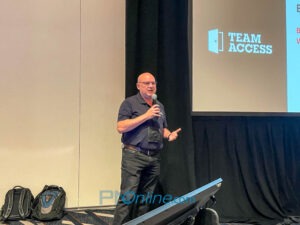
“Our job, our goal, our hope is to create opportunities for people to get to the start line, because that’s what they want. They want the same chance,” Davis says.
Davis says the first couple of years were hard, but Hansen worked with the El Tour representatives to find out what was needed to support the adaptive riders and ensure the road course was safe and accessible.
“For many years, a part of El Tour, which was really exciting for many people, was you had to get off your bike and carry your bike through a running wash and to the other side of the road, and then get back on your bike,” Hansen says. “Well, that pretty much cut out people who were in a handcycle or have difficulty running across with their bike. So, just thinking about things like that. If we’re going to design a course, let’s make sure that everybody can access it. Appropriate staging like parking and rest facilities. This should be a no-brainer, but it’s still amazing to me how many event producers and city event list coordinators don’t talk about what constitutes an ADA porta potty and how many you need.”
Just over 20 adaptive riders completed El Tour in 2021, and last year there were about 150 riders. Davis says they learned three big things — to continue to be committed to seeing change happen, communicating with everybody as much as they can and being committed to seeing the process to continue to improve over time.
““What I learned through talking to the adaptive athletes is El Tour is the finish line,” Davis says. “El Tour is the cherry on top. The real value with what we’re trying to do actually occurs in mobilizing folks who have an adaptive need, who are struggling in some way to get them to come out and believe that they can take on this challenge, to engage with others around them, to show up on a regular basis for training and to begin working toward this end goal of complete riding and completing an El Tour, and that combats depression, combats isolation, combats the loneliness.”
Davis says Team Access provides registration fees and discounts, jerseys, training and equipment support, and Hansen handles the hands-on part. Hansen says SAAS has 75 types of bikes, including handcycles, foot-pedal recumbent trikes, tandem side-by-sides and front-back tandems.
They’ve also worked with El Tour Executive Director TJ Juskiewicz to find logistical solutions, add adaptive categories for timing results, educate aid station volunteers to offer riders assistance when needed and create accessible award podiums. And they’ve talked with adaptive riders to address their needs and remove barriers.
Davis says they’ve also partnered with community businesses to provide parking for the riders and their equipment.
“I just want to encourage you, if you’re thinking about doing something like this, one of the biggest things that we all have to remember is changing culture is hard. It doesn’t happen overnight,” Davis says. “You’re trying to change a series of beliefs. You’re trying to change a series of behaviors. You’re trying to change a series of mindsets. And people don’t always understand.”
In the meantime, Team Access keeps emphasizing the idea that accessibility is good for business and doesn’t have to be expensive if it’s included from the beginning.
Team Access Vice President Amber Russell is still working to grow the cycling team with outreach to national organizations. They’ve added more event volunteers, including student-athletes from Pima Community College, increased accessibility by providing transfer chairs at each aid station and offered dedicated support and gear vans for adaptive cyclists.
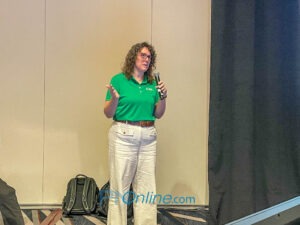
In keeping with the community spirit, Russell says Team Access encourages riders to fundraise on behalf of an organization of their choosing.
“And the goal behind that is that we don’t need to to have the biggest slice. We just need a bigger pie,” Russell says. “And the bigger pie is by creating an environment where everybody can come together, maintain their identity as their own organization and group, but they can still be a part of this bigger movement.”
Hansen says last year’s El Tour fundraising brought in $85,000 for SAAS.
“The community can do it if empowered with the proper tools, the proper motivation, the integrity and the trust that they are deciding what it is they want to do,” Hansen says. “ADA isn’t about special treatment … it’s a place for everybody. It’s equity. Our athletes are highly motivated and they’re resilient … For event organizers, for municipalities, for nonprofits, your events, your cities, everything will have more determination. You’ll have more community spirit if you play it right and if you get everybody involved and you empower people to have a voice. And inclusion isn’t difficult, it just needs an open mind, planning, curiosity.”